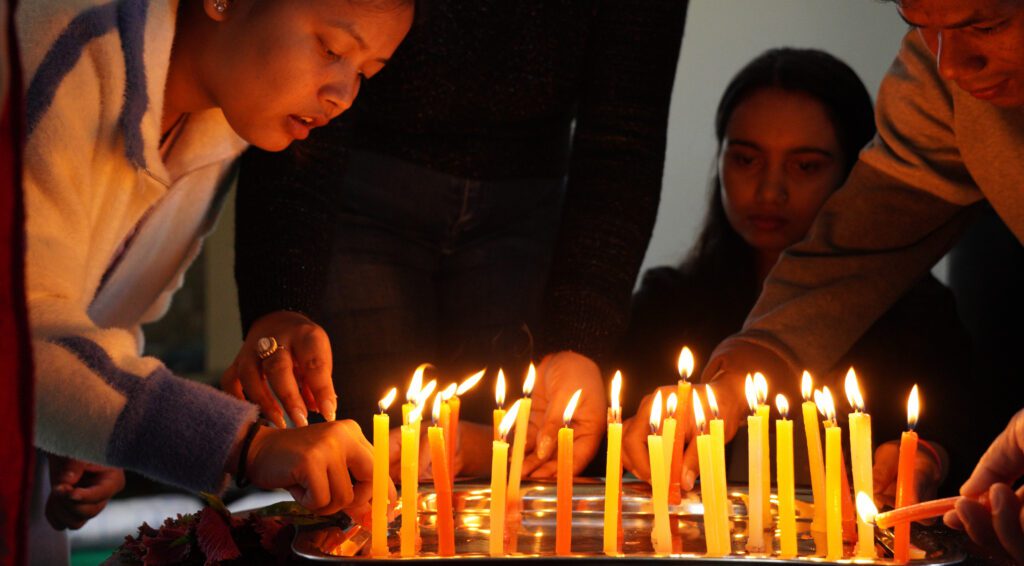
Since Nepal’s Comprehensive Peace Accord (CPA) formally ended the decade-long conflict in 2006, thousands of families – particularly women and children – have continued to carry its trauma. What lingers is an invisible legacy of emotional, psychological, and social wounds that shape personal and communal life and threaten the family/social cohesion and peace that the peace agreement was supposed to restore.
In my 23 years of peacebuilding, spanning both conflict and post-conflict periods, I have witnessed how deeply trauma, especially intergenerational trauma, disrupts individual lives, health, and community harmony. Women who survived the war now watch their children, raised in fractured families or displaced environments, struggle with feelings of abandonment, identity loss, and mental distress. These young adults, shaped by the silence surrounding their past, often carry pain that was never theirs, yet society has failed to acknowledge or address this inherited burden.
Social cohesion depends on trust, connection, and a shared sense of belonging. When ignored, trauma – especially passed down from parent to child – weakens these very foundations. The absence of systemic healing mechanisms, meaningful acknowledgment, or inclusive community spaces has left families isolated, with broken intergenerational ties and minimal societal support. Young people, particularly those whose parents were killed, disappeared, or silenced by both the state and the Maoist party, especially in cases of conflict-related sexual violence, continue to search for answers. They often face silence in return, which is not neutral; it is ongoing violence.
The neglect of intergenerational trauma is contributing to the rupture of social cohesion not only within families but across entire communities. Children raised in school hostels run by the Maoist party, away from surviving family members, now speak of emotional detachment, lack of identity, and betrayal in the safe spaces provided by Nagarik Aawaz during “Intergenerational Peace Tables”. Many women, especially survivors of conflict-related sexual violence, remain voiceless in national narratives. Their pain, both visible and invisible, has never been meaningfully heard or integrated into Nepal’s peacebuilding process, especially in the absence of an effective transitional justice framework. Yet, even without full legal mechanisms, much more could have been done. Community healing initiatives, intergenerational dialogues, and psychosocial support could have built bridges where trauma built walls. In Nepal’s federal system, ward-level governments are uniquely positioned to facilitate localized reconciliation, but most have remained silent, failing the very people closest to them.
Rebuilding and strengthening social cohesion requires a holistic, feminist approach to peace:
- Acknowledging the realities of those most affected by conflict.
- Creating safe spaces for storytelling, healing, and solidarity.
- Investing in psychosocial support that is culturally rooted and accessible.
- Facilitating intergenerational dialogues to restore bonds between survivors and their children.
- Ensuring economic empowerment, especially for women and youth.
Peace cannot be sustained when wounds are left open. Healing intergenerational trauma is not a secondary task; it is central to restoring the trust, dignity, and connectedness needed for cohesive families and resilient communities. Without it, we risk repeating silence as policy and disconnection as our legacy.