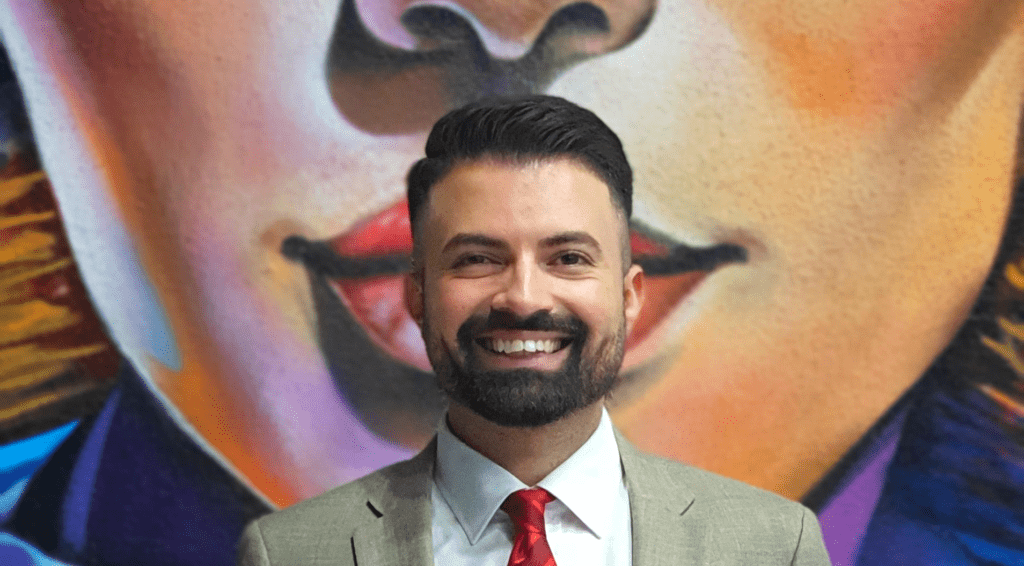
An interview with Luis Francés, Venezuelan peace and gender specialist with extensive experience in the humanitarian, social, and diplomatic sectors, conducted by Dr Gal Harmat, Senior Fellow, swisspeace.
Luis Francés has an extensive experience advocating for vulnerable populations, including Indigenous communities in Venezuela. Through activism and applied gender research, he explores the interplay between culture and gender dynamics. He exemplifies how individuals from intersectionally diverse backgrounds can translate ideas about culture, gender, and peace into practical, impactful initiatives.
How have traditional gender roles in Latin America shaped women’s political and social participation in peacebuilding and conflict resolution?
Traditional gender roles, largely influenced by Western perspectives, have historically limited women’s political and social participation in Latin America, with varying levels of resistance across countries. Factors such as the social systems in pre-Columbian Indigenous nations, the Spanish and Portuguese patriarchal order, and the societal effects of independence wars have all contributed to this limitation. Nevertheless, women’s participation in peacebuilding and conflict resolution has increased. For instance, women played a pivotal role in Colombia’s 2016 Peace Agreement, leading to the inclusion of around 122 measures aimed at women and girls. Despite these advances, implementation remains limited, with reportedly less than 13% fully enacted.
How do gender expectations influence governments’ and institutions’ responses to gender-based violence (GBV) during periods of conflict in Latin America?
Gender expectations often lead to inadequate responses to GBV during periods of conflict and crises, especially when women are excluded from decision-making and policy development. This can lead to the prioritization of traditional security measures over a comprehensive response to GBV. For example, in the Guatemalan Peace Accords of 1996, the creation of a formal women’s consultation body was fundamental in advancing the 28 commitments focused on women’s and Indigenous women’s rights. However, long-term progress has remained slow, and Guatemalan women continue to fight for their rights and inclusion.
How do cultural perceptions of masculinity affect conflict dynamics and peace efforts in Venezuela?
Cultural perceptions of masculinity emphasizing control and dominance tend to extend conflict dynamics. In Venezuela, these perceptions are identifiable when analyzing the escalation of violence and the friend-foe rhetoric related to the multifactorial crisis the country faces. Initiatives such as “Women for Dialogue and Peace in Venezuela” and the agenda “From Partners in Conflict to Partners in Peace” led by the feminist NGO Cauce, bring women from across the Venezuelan political spectrum together to advocate for women’s inclusion and gender-equitable dialogues as solutions to the Venezuelan crisis.
To what extent do women’s organizations in Latin America challenge patriarchal systems during peacebuilding processes, how successful are they?
Success varies by country but while I notice some progress, I think there is still a long way to go. Gender-equitable dialogues are still essential in ensuring that gender issues are no longer conflated with women’s issues. These dialogues should also contribute to the involvement of Latin American men and encourage them to rethink gender roles and expectations.
How does art in Venezuela challenge or reinforce traditional gender norms and stereotypes in the context of political or social conflict?
Street art in Venezuela often serves as a platform to challenge traditional gender norms and to transmit political messages. In the context of the 2014, 2017, and 2018 protests, street art groups painted murals in which women were represented as active leaders in resistance movements instead of passive victims. This subverted and redefined societal perceptions, challenging the typical representation of women as maternal figures suffering for the victims in the context of violent protests. To a lesser extent, this street art also depicted LGBTQI+ individuals in resistance movements. Today, almost all of these murals have been lost or deliberately erased following the end of the protests.
What role does art play in the collective memory of gender-based violence in Venezuela, and how does it help or hinder peacebuilding efforts?
Art such as theatre and scenic arts play a pivotal role in preserving the collective memory of gender-based violence in Venezuela. Over the last decade, alternative theatre groups and collectives have used theatre performances to criticize and raise awareness around gender-based violence and femicide, often through the perspective of the affected women. By avoiding trivialization or re-victimization of those affected, these artistic approaches address this topic in a moving manner and spark reflection. In a highly politicized context like the Venezuelan one, these theatre works represent a creative, innovative, and sometimes controversial way to advocate for the eradication of gender-based violence and to raise awareness among the audience.