The days when the UN Security Council speaks unanimously have become rare. However, January 24 of this year was one such occasion. The members of this powerful body “strongly condemned the terrorist attacks in the Point Triple Area in Benin.” In this northern region of the country, armed groups from Niger and Burkina Faso launched an attack at the beginning of the year on a well-equipped military base of the Beninese army.
The group Jama’at Nusrat al-Islam wal Muslimin (JNIM), which is affiliated with Al-Qaeda, claimed responsibility for the attack. Around 30 people lost their lives in this assault.
Using Violence to Reach the Sea
The West African coastal state of Benin borders two landlocked countries to the north: Niger and Burkina Faso. In these nations, poverty is widespread, and violent extremist groups are gaining strength and crossing national borders. This is not a new phenomenon, nor did it start with the deadly attack last January. As early as 2022, Acled, a U.S.-based NGO specialized in conflict analysis, warned: “Jihad is gaining a foothold in northern Benin.”
For radical groups, destabilization has a strategic purpose: they seek direct access to the sea. Acts of violence come at a cost, and most of the global trade still relies on container ships.
The fact that the African continent is generally underrepresented in Western media coverage—creating challenges in political advocacy and fundraising—is nothing new for Brücke Le Pont. However, what is unusual is that even within Benin, the conflict receives insufficient attention. Why? The government wants to maintain the image of a peaceful country. For Brücke Le Pont’s local partners, this creates problems in securing funding opportunities. As long as the government turns a blind eye to the conflict, it also restricts financial support for those working proactively to prevent escalation.
Civil Society as a Shield
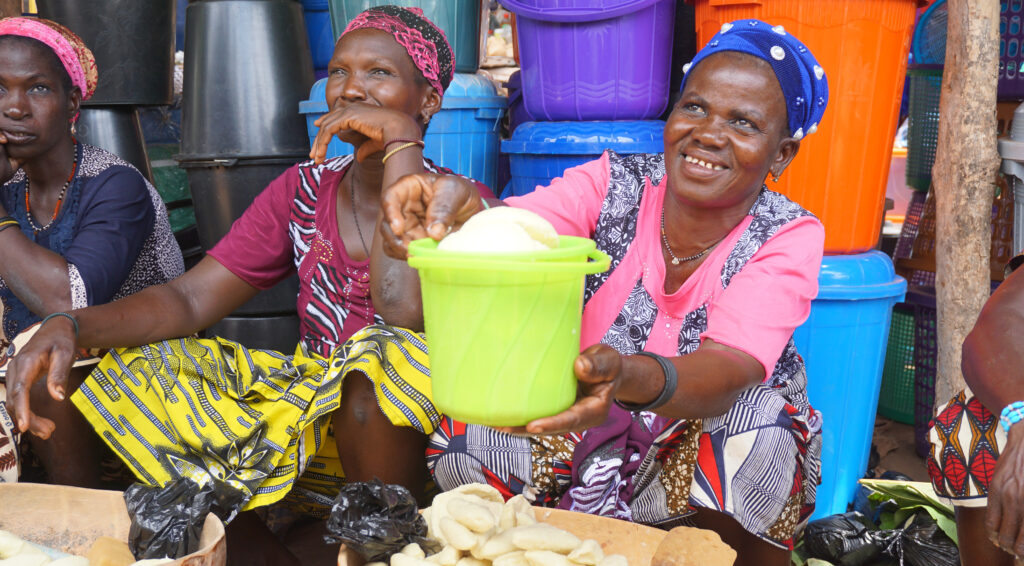
As part of the “Dignified Work” program, Brücke Le Pont is working to strengthen social cohesion. In northern Benin, this is achieved through the Shea Project, which provides women with access to profitable shea butter production. By forming cooperatives, project participants increase their income and reduce the societal mistrust that radical groups exploit to their advantage. The initiative also includes the Peul people, a nomadic group often viewed with suspicion by settled communities, as well as refugees who have now joined the project.
Thus, social cohesion is crucial in keeping the sea out of reach for violent groups—at least for now. However, despite the government’s persistent denial, the region is becoming increasingly fragile. The authorities are well aware of this reality. Following the deadly attack in January, Beninese Colonel Faizou Gomina admitted: “We have suffered a severe blow.”