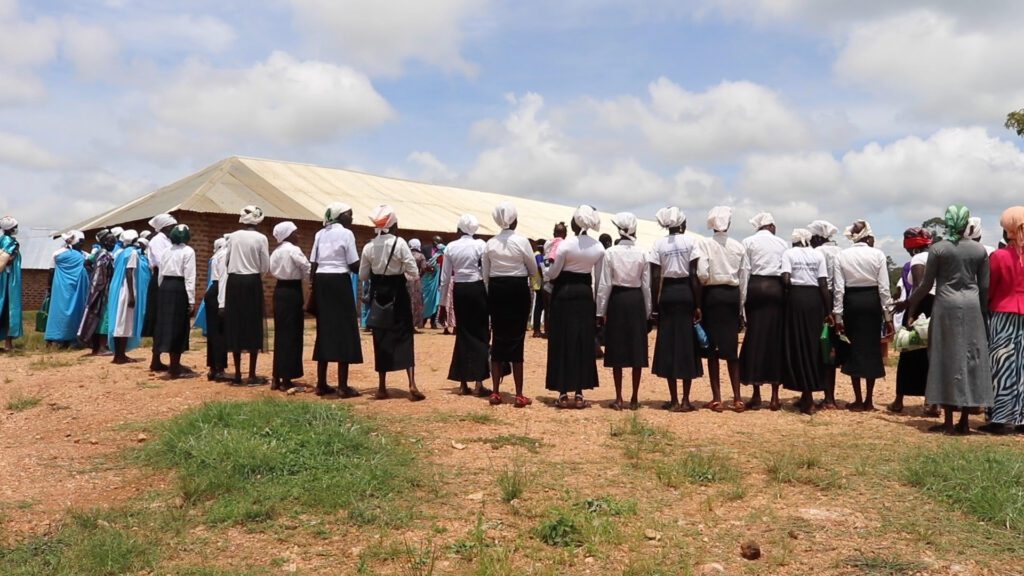
Across the world, governments are increasingly defining security through militarization and rising defense budgets. In South Sudan, this trend has direct consequences for everyday life. Instead of ensuring safety, it often deepens insecurity, especially for the most vulnerable, while weakening the social foundations communities rely on.
Increasing investment in military structures often comes at the expense of essential services such as healthcare, education, and livelihoods. Yet, these are precisely the systems that nurture dignity and long-term stability.
When security is understood primarily in military terms, violence increases. The increased availability of weapons increases the risk of arms misuse, including in cattle raiding, intercommunal violence, and gender‑based violence.
Fear becomes a daily reality, driving displacement even before conflict erupt. People do not only flee in times of active conflict, but also when they sense heightened risks of violence. In South Sudan, even relatively stable areas are subjected to persistent threat. The effects extend beyond borders: movements of refugees and returnees tie South Sudan’s crisis to neighboring Uganda and Kenya. Therefore, the insecurities caused by militarization demand regional solutions.
For over five decades, Mission 21 has worked alongside faith-based partner organizations deeply embedded in their communities to promote peacebuilding in South Sudan. At the heart of Mission 21’s work is the so-called bottom-up approach: listening closely to communities and working through trusted local partners. This ensures that support reflects the real needs and life experiences of the people supported by the organization. These partnerships also enable engagement with local authorities to promote dialogue, trust, and shared responsibilities without reinforcing militarized logics of security. Ultimately, this work calls for a broader understanding of security.
For Mission 21, security means that people can live in dignity, protect their families, sustain their livelihoods, and access basic services. Across all its engagements, including emergency response, Mission 21 integrates peacebuilding, reconciliation, and forgiveness as core elements of every project approach. Even in crisis and humanitarian settings, Mission 21 seeks to strengthen dialogue, trust, and non‑violent conflict resolution, ensuring that immediate assistance does not unintentionally exacerbate tensions but instead supports social cohesion and mutual respect.
The path toward lasting peace in South Sudan requires strengthening communities, human dignity, and recognizing peacebuilding as a vital foundation for security. Finally, stronger collaboration across humanitarian, development, and peace actors is essential to advancing holistic, people‑centered security approaches.