An interview with Annalia Bodeo, the Humanitarian and Peace Program Officer in Ouagadougou for the Swiss Agency for Development and Cooperation (SDC).
Could you describe the peace and social cohesion program that the SDC runs in Burkina Faso? What were the reasons and objectives behind launching this program?
The Swiss Cooperation Office has been present in Burkina Faso for over 50 years. In October 2023, the SDC launched its Peace and Social Cohesion Program, following a feasibility study in response to the country’s security and humanitarian crisis. Since 2015, the crisis has led to increased community tensions, particularly over natural resources. According to official data, there were 2,062,534 internally displaced persons in the country in March 2023. In urban areas, these populations are facing increased competition with host communities for access to natural resources, essential services, and economic opportunities.
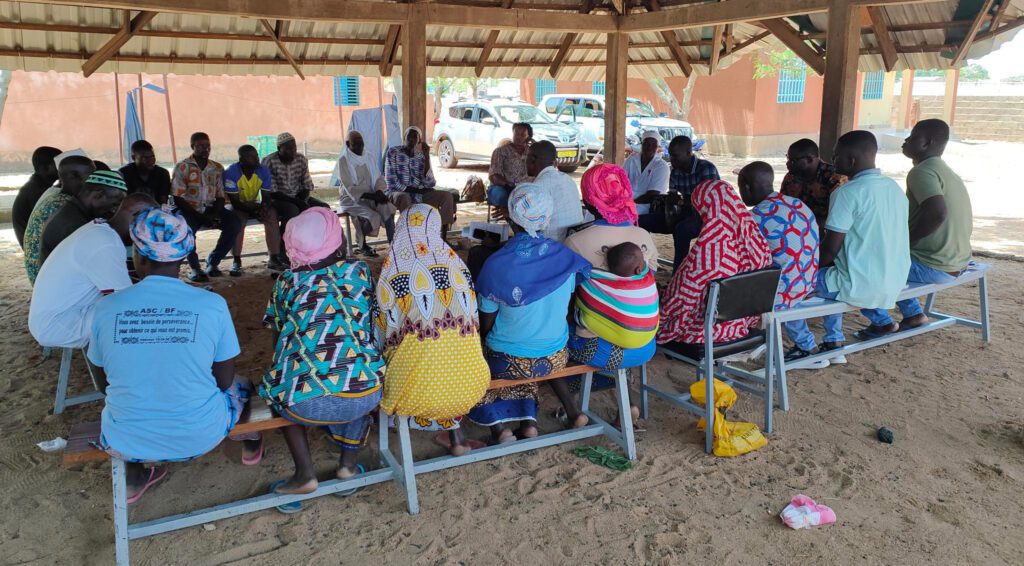
Strengthening social cohesion lies at the heart of this program. As part of Switzerland’s humanitarian-development-peace triple nexus approach in Burkina Faso, it aligns with the priorities of Switzerland’s international cooperation strategy 2025-2028. The overall objective of the Peace and Social Cohesion Program is to lay the groundwork for a positive and peaceful transformation of the conflict by 2031. This will be achieved through inclusive endogenous mechanisms involving public institutions and civil society.
What are the priorities of the SDC’s Peace and Social Cohesion Program?
The program is structured around five components. The first component aims to strengthen the effectiveness, coordination, and relevance of interventions in the areas of peace and social cohesion through a joint peace resource mechanism that supports the members of the dialogue platform “Cadre de Concertation pour la Consolidation de la Paix”. Led by Switzerland since October 2024, this platform comprises NGOs as well as technical and financial partners. Ministries involved in peace and social cohesion are regularly invited to coordinate their actions in the field. The second component consists of identifying and implementing promising and innovative local initiatives in social cohesion and peace, thereby fostering sustainable peacebuilding in a laboratory for peace and social cohesion. The third component of the program focuses on mediation and resolution of local conflicts related to natural resources in agro-pastoral areas. The last two components aim to strengthen security sector governance and promote respect for human rights, especially among the most vulnerable populations.
The SDC supports the national action plan for peace developed by the Technical Secretariat for the Promotion of Peace and Coexistence of the Burkinian Ministry of Humanitarian Action. This support includes workshops on social cohesion and peace infrastructure, as well as training on various forms of justice.
What results have been achieved since the program was launched?
The program consists of two phases. We are currently in the first phase, which runs from 2023 to 2027. The program is extensive, and we are making good progress. For instance, between June 2024 and June 2025, nine networks of agro-pastoral mediators independently resolved 362 local conflicts related to natural resources. Several mediation processes are underway to establish four local agreements and two mechanisms for water and forest use in close collaboration with communities and local authorities. Regarding actors in the security sector, over 300 individuals expanded their understanding of accountability, human rights, and international humanitarian law. For the first time, through a workshop on social cohesion, state authorities, magistrates, cultural and religious leaders, and local active civil society organizations (including women’s and youth organizations) were brought together. This workshop provided an opportunity to define the basis for a national roadmap on reconciliation, social cohesion, and lasting peace in Burkina Faso. The following steps will focus on adopting this roadmap at the highest level. The result of an inclusive, collaborative process, the roadmap will guide reconciliation efforts and actions in the areas of peace and social cohesion.
How is social cohesion linked to lasting peace in Burkina Faso?
For me, social cohesion is the key to lasting peace. A young Burkinabe recently told me, “It’s about knowing how to live together, accepting and valuing differences, and, above all, forgiveness.” This attitude reflects the deep-rooted solidarity in Burkina Faso. To strengthen it in the long term, three aspects seem essential to me: first, promoting dialogue, combating ethnic and religious stigmatization, and strengthening social justice; second, investing in conflict mediation concerning access to water and land; and third, ensuring the inclusion of women and young people by valuing their experiences and active roles.
Building bridges between languages, origins, religions, ethnicities, and traditions is essential. Through dialogue and respect, diversity becomes a source of wealth for peace and social cohesion, which are built every day.