Ten years ago, Mission 21 solely focused on development cooperation. Humanitarian aid was seen as the domain of more specialized—often larger—organizations. Donations the organization received in response to major disasters, such as the 2004 tsunami in Southeast Asia or the Fukushima catastrophe in 2011, were passed on to trusted partner organizations.
First Humanitarian Engagement: Responding to a Crisis
The shift came in 2015, when violence by the so-called Boko Haram group devastated large parts of northeastern Nigeria, a region where Mission 21 had worked for decades on sustainable development with local partners. As a result, more than 2.5 million people were forcibly displaced. In response, Mission 21 launched a humanitarian aid program in partnership with its long-standing Nigerian church partner, the EYN (Church of the Brethren in Nigeria), and the Church of the Brethren USA. Their goal was to support internally displaced persons whose basic needs were not met by any other organization.
Lesson #1: This trilateral partnership, grounded in deep, longstanding relationships, laid the foundation for Mission 21’s humanitarian engagement in Nigeria.
Structure and Development
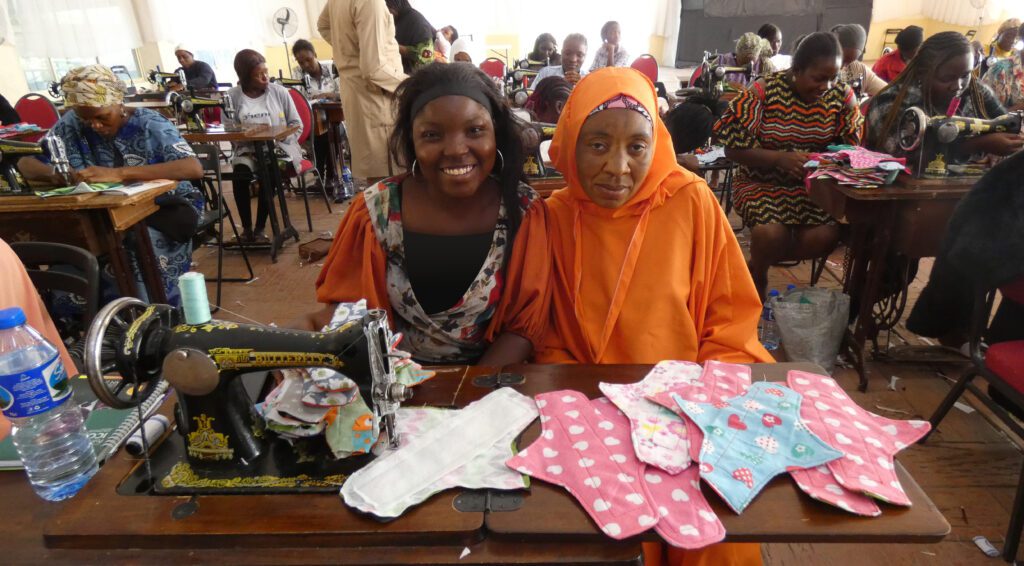
In parallel, Mission 21 established a coordination office in Nigeria and appointed a national program coordinator. Since then, the organization has steadily expanded its work by teaming up with new Nigerian partner organizations, bringing expertise across humanitarian aid, development, and peacebuilding.
Existing projects were adapted to address the socio-economic fallout of multiple, overlapping crises, particularly for internally displaced populations. Interfaith peacebuilding networks began integrating income-generating initiatives, which were eventually brought under the umbrella of Nigeria’s national Emergency Preparedness and Response Team (EPRT).
Lesson #2: Successfully integrating the triple nexus requires a shared theory of change, better coordination across projects and partners, network building, and capacity development—both within Mission 21 and among local partners. This also involves raising awareness among donors, who must understand that coordination activities are not “overhead costs” but a fundamental prerequisite for implementing the triple nexus.
Conflict Sensitivity as the Cornerstone
Thorough conflict analysis and conflict-sensitive program management constitute the central “cement” for operationalizing the double nexus (development cooperation and humanitarian aid) and later the triple nexus (adding peacebuilding). Yakubu Joseph, Program Coordinator of Mission 21 in Nigeria, confirms this as follows: “Our conflict analyses showed us that deeply rooted structural issues like poverty, unemployment, climate change impacts, and illegal resource exploitation are at the heart of many conflicts,” he explains. “We also learned that during violent crises, people need humanitarian assistance—but that aid must be delivered with a strong sensitivity to the conflict dynamics.”
Lesson #3: A consistent, conflict- and gender-sensitive approach strengthens the links between projects. “You have to consider all the factors and how they interact,” says Joseph. “Take gender-based violence, for instance. Survivors need long-term support—mental health care, and ways to rebuild their livelihoods.”
Opportunities of the Triple Nexus Approach
- Holistic Impact: Nexus-based programs often deliver deeper impact by addressing multiple dimensions of people’s lives at once.
- Stronger Resilience: By combining humanitarian, development, and peacebuilding tools, communities become more resilient to future shocks.
As Joseph notes: “You only truly see the value of the triple nexus when the focus shifts from short-term needs to long-term resilience.”
- Empowered Partnerships: Emphasizing local partnerships not only brings valuable contextual knowledge into the work—it fosters local ownership, a key driver of sustainable change.
Challenges of the Triple Nexus Approach
- Coordination Demands: The triple nexus calls for intensive coordination. Tensions can result from each sector’s differing logic, timelines, and priorities.
- Resource Conflicts: When funding is limited, internal disagreement over resources can undermine nexus coherence. Prioritizing resource allocation becomes essential.
- Capacity Building: Neither Mission 21 nor all its partners were initially familiar with the nexus framework. Joint training and dialogue are crucial to developing shared understanding.
- Context Matters: The triple nexus is not a “one size fits all” model. Effective implementation must be locally adapted—especially in fragile and conflict-affected countries, where detailed context analysis is essential.
Conclusion
For Mission 21, the triple nexus is not an abstract idea, but a practical framework for thought and action. At its core lies the conviction that humanitarian aid, development cooperation, and peacebuilding must be conceived and implemented as interconnected efforts to achieve lasting impact. This requires strong conflict sensitivity, in close collaboration with local partners and their knowledge, through participatory processes, and anchored in solid strategic planning.