Peru is going through a period of political instability and rising polarization. The space available to people defending their rights is narrowing steadily. Those most affected are individuals and communities demanding that mining companies comply with national and international environmental and health standards. With legislative changes such as the reform of the APCI law (an anti-NGO measure) the state is tightening pressure on civil society actors.
Strategic Adaptation by Peace Watch Switzerland (PWS)
In Espinar, communities face severe environmental harm and human rights violations. Research around Glencore’s Antapaccay copper mine highlights serious risks to health, livelihoods, and cultural traditions. In response to attacks on community rights and the rise of more authoritarian governance, PWS is expanding its human rights work in the Espinar region and supporting local communities and environmental defenders.
For now, however, the organization cannot rely on its tried-and-tested tool: the deployment of international volunteers whose physical presence as human rights observers has long provided protection and visibility to those at risk.
Reorientation Through Local Partnership
After conducting a risk assessment, PWS shifted its strategy. The focus is now on strengthening local structures rather than maintaining an international presence. For this reason, PWS supports the work of Derechos Humanos Sin Fronteras (DHSF).
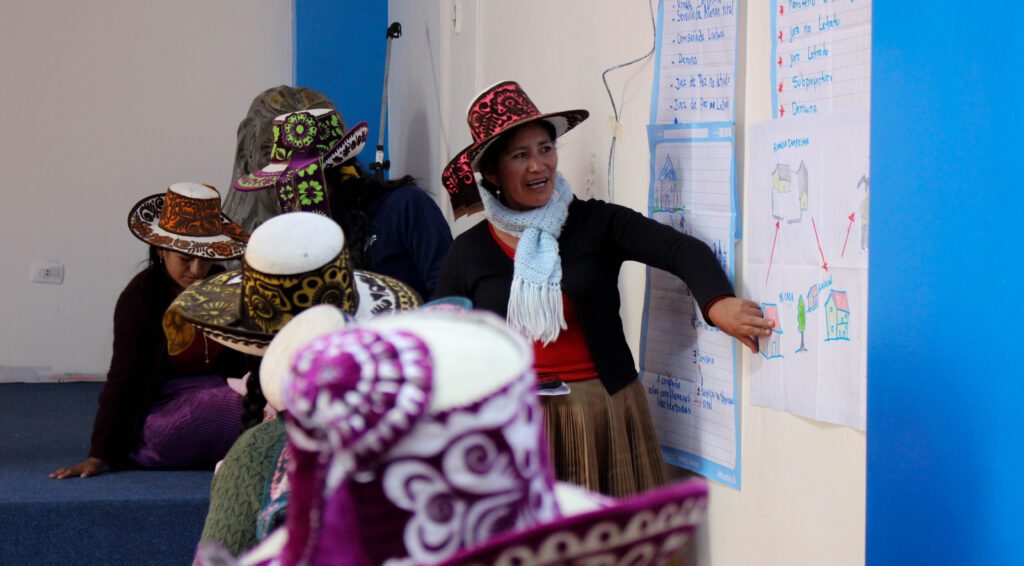
The partnership aims to strengthen the capacities of people defending their rights despite repression, especially women in leadership roles. DHSF runs activities that help affected individuals gather evidence, navigate administrative procedures, and claim their rights independently. Psychosocial support is also a key component, helping reinforce the resilience and endurance of people who have long been active in a high-risk environment.
Using International Levers While Preserving Local Ownership
PWS and DHSF are also working to expand their international advocacy efforts. When the state restricts civic space at the local and national levels, international mechanisms — UN bodies, human rights processes, and complaint pathways such as those offered by the OECD or certification schemes — become increasingly important for holding companies from the Global North accountable.
Throughout this process, the two partner organizations collaborate with experienced actors, while affected communities continue to set the direction and priorities. This ensures that ownership remains firmly rooted at the local level.