The past decades have been harsh for the people of Honduras. Following a military coup in 2009 that ushered in a narco-dictatorship until 2022, the country still faces an uncertain future today. In such demanding contexts, effective development cooperation is defined by its ability to respond to people’s needs, even when the political climate is hostile.
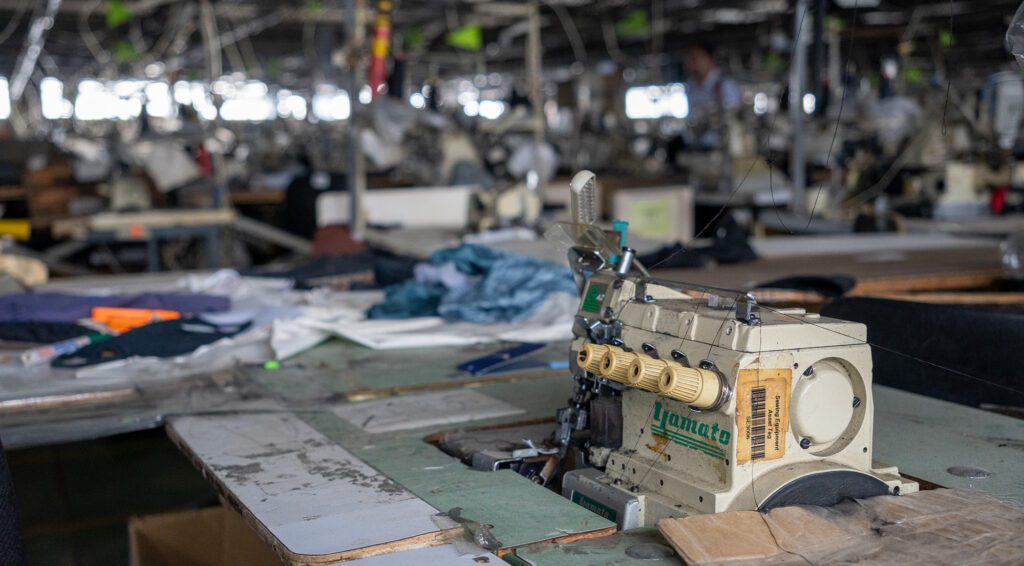
Colectiva de Mujeres Hondureñas (Codemuh), a partner organization of Brücke Le Pont, managed to do just that. For more than 30 years, the group has championed women’s rights, placing special focus on the often-overlooked realities inside the country’s textile factories.
Finding Key Allies in the State Apparatus
Maria Luisa Regalado, Codemuh’s executive director, looks back on the years of dictatorship with clarity. Throughout that period, Codemuh stood firmly behind Honduran women. Beginning in 2018, Regalado and her team engaged in persistent advocacy with decision-makers, government bodies, and human rights organizations, while simultaneously pursuing strategic litigation at national and international levels. They educated affected women about their gender-specific rights and labor issues more broadly, offering crucial legal guidance at a time when both workplace abuses and gender-based violence were widespread. Today, many of these women connect informally via group chats, seeking advice and supporting one another.
During the dictatorship, Codemuh chose not to operate in the shadows. Instead, they confronted state officials head-on with evidence of labor and human rights violations in the textile sector. “We made a deliberate effort to keep in close contact with our allies inside the public administration,” Regalado says. Such allies did exist and proved vital for achieving any progress amid authoritarian rule.
From Street Protests to the Negotiating Table
Grassroots organizing was equally crucial to the project’s success. Time and again, Codemuh managed to bring government officials to the negotiating table. “When two major clothing manufacturers violated the labor rights of more than 100 women, we mobilized a demonstration with dozens of affected workers outside the Honduran Institute for Social Security (IHSS),” Regalado recalls. “That same day, a delegation from the IHSS leadership agreed to meet us and hear our case.” It was a risky move, but ultimately all the women received compensation.
Seeking allies, forging networks, insisting on rights—even under a dictatorship. Regalado and her team needed remarkable courage. But their persistence paid off: today, she meets regularly with the Chief Justice of the Supreme Court to discuss ongoing labor challenges in the textile industry. The country’s separation of powers has since stabilized, and Codemuh’s labor and human rights expertise now feeds directly into the jurisprudence of Honduras’ highest courts—helping to shape structural change long after the dictatorship’s end.