Lake Titicaca provides water and food for approximately 2.1 million people. At the same time, climate change, wastewater, mining-related heavy metals, and municipal waste threaten water quality and livelihoods. These pressures have escalated social conflicts in the region. They particularly affect indigenous smallholder farming families, who are politically marginalized and directly dependent on natural resources.
Mission 21 understands peace not merely as the absence of violence, but as positive peace: as social conditions in which social justice, political participation, equality, and the protection of shared livelihoods are guaranteed. This is precisely where the work of our partner organizations in Peru and Bolivia comes in. Together with indigenous women’s and youth organizations, they combine the protection of Lake Titicaca with the strengthening of individual and collective rights. One example is the recognition of the lake as a legal entity. This creates a legal and political lever to assert the interests of local communities against pollution, encroachments, and competing claims to use the lake. At the same time, the political participation of indigenous women strengthens their role in spatial and water resource management planning.
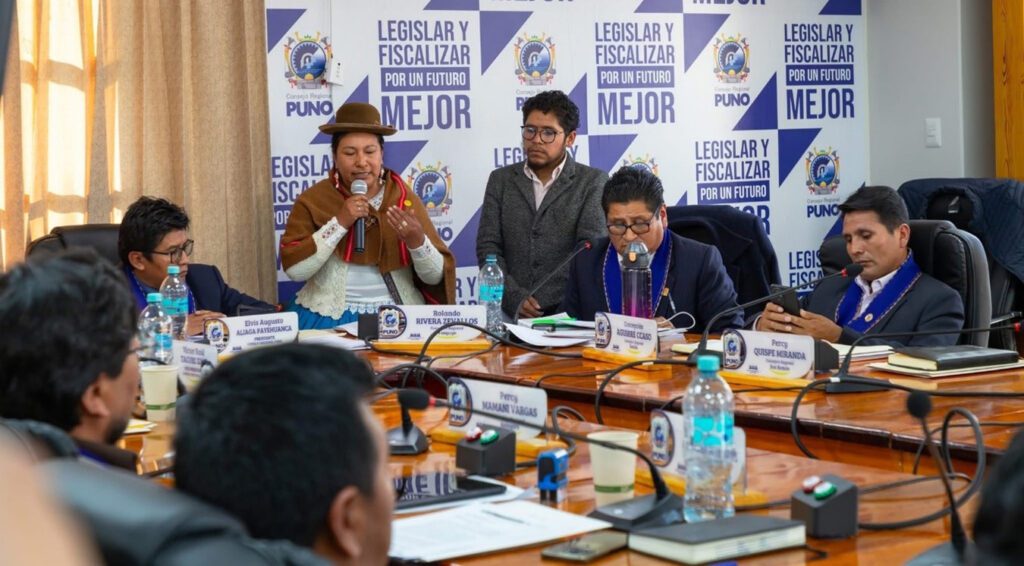
Peacebuilding is thus manifested not primarily in the resolution of an ongoing conflict, but in changing the conditions that can foster conflicts. The collaboration among eight partner organizations facilitates dialogue between civil society and government authorities—for example, at the 2026 binational meeting in La Paz. There, Bolivian government agencies specializing in water supply participated in the dialogue platform that was established. In Peru, legal advice played a decisive role in ensuring that the women’s network’s petition to the regional government of Puno for the recognition of the lake as a legal entity was accepted.
This also raises the question of how we recognize our contribution to peace. In the Lake Titicaca project, impacts can be observed, among other things, in improved political participation, stronger connections between civil society and government actors, and the integration of local concerns into political and regulatory processes. At the same time, a challenge arose: partner organizations and networks with strong local roots do not always have the capacity or access needed to influence political decision-making processes, regulatory frameworks, and overarching protection mechanisms. Strengthening networks with national and international actors in water and environmental governance is therefore an important next step.