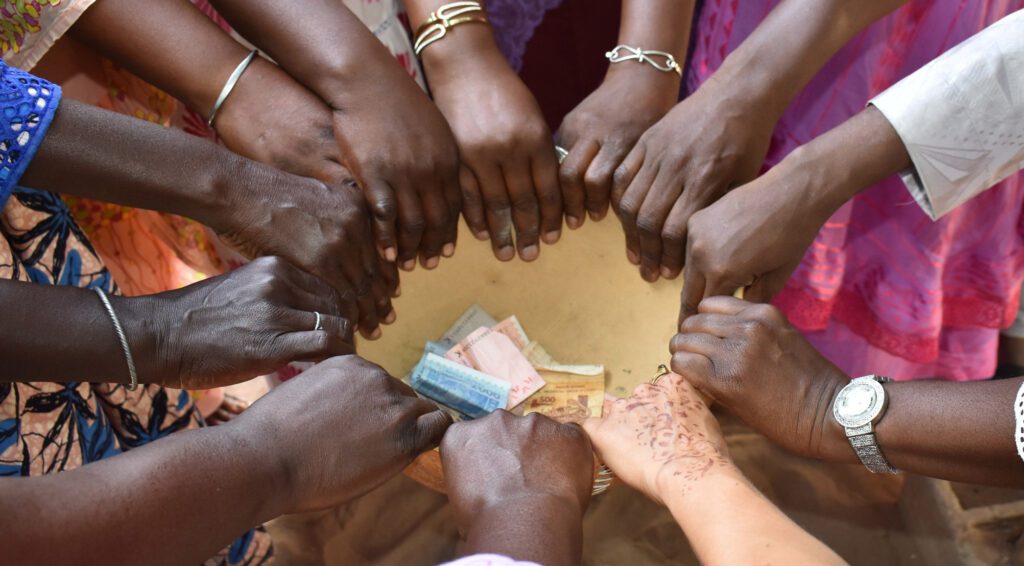
In the debate over the power shift in international cooperation, the calabash solidarity groups approach (supported by Fastenaktion in Senegal) demonstrates the effectiveness of locally led development. In these groups, members regularly and anonymously pool small amounts of money, exchange ideas, and support each other. From these communal funds, members in need can access interest-free loans or finance joint economic initiatives, such as group purchases.
Developed by Senegalese people for Senegalese people, this approach has grown into a national movement over 20 years, with over 2,500 solidarity calabashes benefiting more than 800,000 individuals. A study by Fastenaktion and swisspeace impressively shows how these calabashes enhance social cohesion, reduce economic pressure through interest-free emergency loans, and create shared economic learning spaces. While much has evolved dynamically, the strong local anchoring and autonomy granted to the calabashes and partner organizations (POs) remain. As Samba Mbaye, a co-developer of the approach, emphasizes: “The key to success of this approach lies in Fastenaktion’s philosophy: they don’t come with ready-made solutions but support communities in developing their own strategies.”
The country program, which supports and accompanies partner organizations and calabash projects, deliberately refrains from imposing external priorities or global trends unless they emerge from the needs of local calabash groups. This provides the members with the necessary time and space to address the issues that burden their daily lives. This refusal to set external agendas is not a lack of interest in global challenges but a conscious effort to strengthen local relevance.
Within the calabash projects, the country program in Senegal has gained concrete experience in transferring decision-making power at three levels:
Coordination Level:
The Senegalese coordination office autonomously selects so-called “indirect partner organizations.” These organizations operate with minimal financial support but high initiative and already reach one-third of the people benefiting from the calabashes (approximately 260,000 individuals). This decision-making power enables faster adaptation to local needs. However, approving a larger budget without specific project activities required some internal persuasion within Fastenaktion.
Partner Organization (PO) Level:
A flexible funding model allows a PO to independently allocate funds, provided they document their experiences. In practice—such as purchasing a vehicle instead of programmatic activities—priorities may differ from the expectations of Northern partners but remain coherent with the project’s goals and are financially justified. This challenges the traditional understanding of North-South cooperation. The analysis of the pilot project with all POs revealed that while flexibility is highly valued, potential risks reamin, such as internal conflicts within the PO regarding fund use, time-consuming decision-making, misuse, or conflicts with donors.
Regional Network Level:
Calabash networks were allocated lump-sum budgets for organizational development. They could choose to allocate funds within the categories of infrastructure, training, and investment in group purchases. They invested exclusively in infrastructure and group purchases rather than training. As a result, 15 out of 17 networks significantly increased their independence.
Subsidiarity in international cooperation only reaches its full potential when it is accompanied by the transfer of resources and decision-making authority and only when supporting international organizations consciously relinquish power and share control.