While the world counts drones, deaths, and wars, people are working tirelessly far from the media spotlight to foster social cohesion—helping communities overcome crises and address conflicts constructively. Helvetas supports this daily peace work.
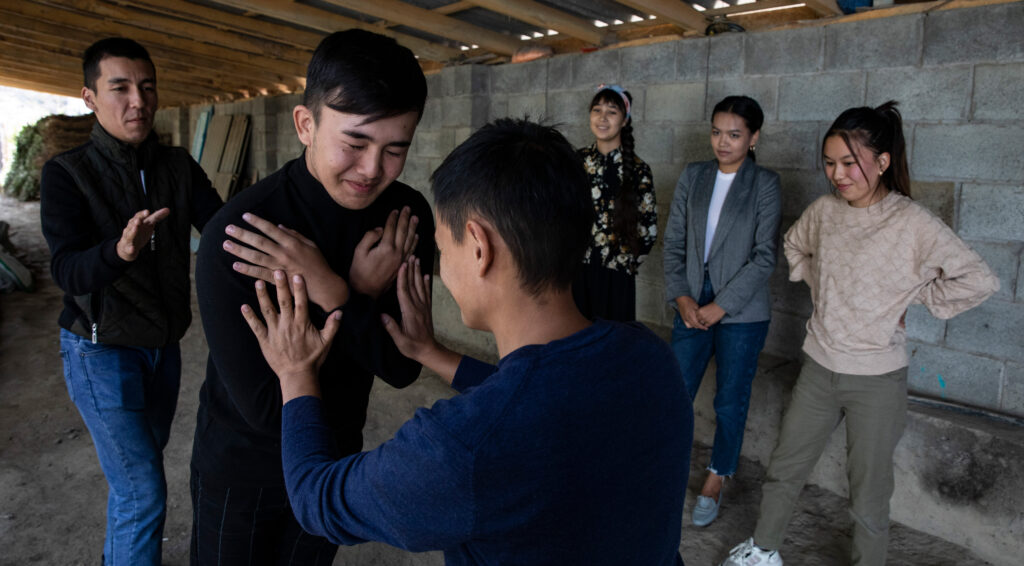
“I just didn’t know how to listen properly,” a father in Kyrgyzstan admitted after taking part in a session with young people focused on communication patterns. The dialogue sessions were part of a project designed to prevent extremist radicalization among Kyrgyz youth. Early on, the project team had spotted a pattern: radicalization tended to go hand in hand with social exclusion, limited civic participation, and a lack of intergenerational dialogue. To address this, Helvetas partnered with a youth organization and brought generations together so they could learn to listen to one another. The result was a break from old patterns, in which young people had long been expected to stay silent and obey.
Helvetas is a development organization that designs its programs in a way that contributes to peace. For example, in Borana in southern Ethiopia, Helvetas supports pastoralist communities in securing their livelihoods amid climate change. Following repeated, severe droughts, the organization supported the restoration of traditional wells, known as “ela.” Representatives of local authorities, village elders, herders, women, and other members of the village communities drew on traditional but forgotten rules, adapted them, and collectively took responsibility for water distribution.
However, reviving traditional infrastructure alone is not enough to ease tensions. As pressure on natural resources increases, conflicts over access to grazing land and water are becoming more frequent. Helvetas and its partners therefore work with communities to improve cooperation between traditional and government institutions, identify conflicts early, and prevent them from escalating. With positive results: After nine unsuccessful community meetings, Helvetas and its partner, the Ethiopian Institute of Peace, supported a more inclusive community dialogue that resolved the conflict. This example has inspired other districts to adopt a similar approach in addressing their own conflicts.
The contexts vary, but a common thread runs through them. Peace grows through participation, fair rules, and the recognition of diverse voices. Other factors reveal whether a project strengthens peace: Are new voices being heard, such as the young people in Kyrgyzstan? Do those involved perceive the rules as fair, as the users of the Ela wells do? And are communities able to address conflicts before they escalate, as the dialogue forums in Borana show?
As international cooperation funding declines and conflicts become increasingly intertwined, this approach is becoming more important. It contributes to social cohesion amid growing social divisions.